The debate on AI video editing vs professional video editors has evolved past the stage of experimentation. For decision-makers in media and entertainment, advertising firms, SaaS companies, e-commerce sites, and digital publishers, the issue is no longer regarding access to technology.
It is about understanding its limits.
Video output has increased across every channel. Campaign timelines have tightened. Content teams are under pressure to deliver more formats, more frequently, with fewer revisions. In response, many organizations turned to automation. The result is widespread adoption of AI video editing across early-stage production tasks.
Yet despite its scale, automation has not removed friction from creative operations. In many cases, it has simply shifted where that friction appears.
The Operational Drivers Behind AI Video Editing Adoption
AI entered video workflows as a response to systemic strain. Creative agencies face recurring bottlenecks during campaign spikes. E-commerce teams must adapt product
videos for multiple marketplaces. News publishers operate under constant deadline pressure. EdTech platforms manage instructional content at scale.
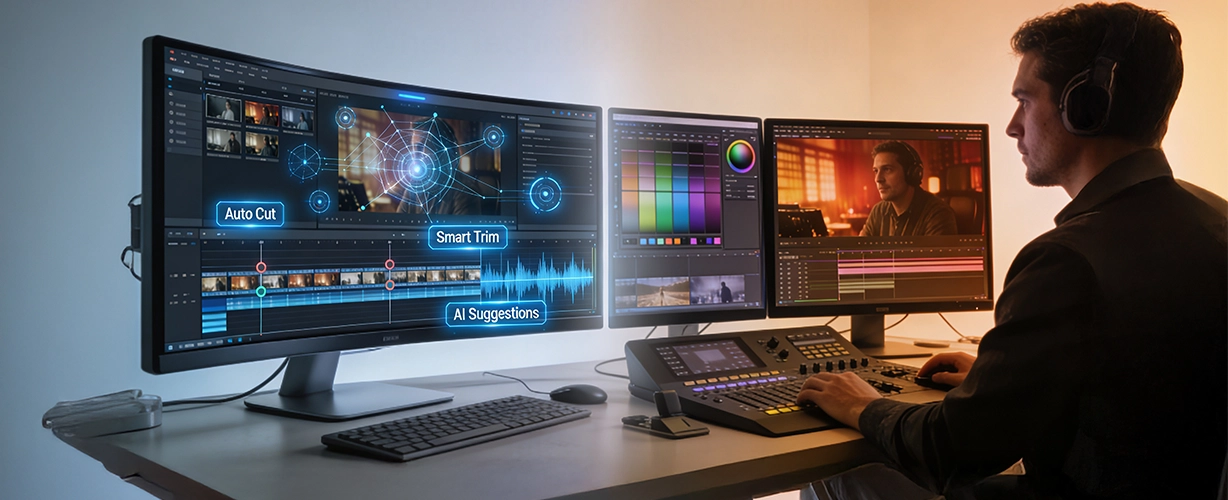
These conditions made automation attractive. AI-powered video editing promised faster turnaround, consistent formatting, and reduced dependency on manual labor. Early use cases focused on trimming footage, sequencing clips, generating captions, and resizing videos for social platforms.
This led to a growing interest in AI video editing tools comparison, as teams attempted to evaluate platforms based on speed, features, and compatibility. What these comparisons often missed was how automation behaves once content complexity increases.
Where Automation Begins to Lose Context
AI video editing systems function through pattern recognition. They detect visual similarity, audio cues, text placement, and predefined rules. This works well for templated content.
Problems emerge when the video requires interpretation.
Brand storytelling depends on pacing, tone, and emotional intent. Editorial content relies on judgment about emphasis and omission. Advertising narratives demand alignment with campaign strategy. These variables cannot be standardized.
This is where organizations begin asking a harder question. When AI editing is not enough, what exactly is missing?
For organizations managing high-impact content, the decision around AI video editing vs professional video editors is driven less by tools and more by responsibility for interpretation and intent.
Structural Risks Created by AI-First Editing Environments
The risks associated with automation rarely appear immediately. They accumulate quietly.
Creative outputs begin to look uniform across campaigns. Brand differentiation weakens. Audiences disengage without obvious cause.
In regulated sectors or news publishing, contextual errors carry reputational consequences. Automated edits may misrepresent chronology or emphasis. Corrections often arrive after distribution.
These failures persist because they do not break workflows outright. They degrade quality signals over time.
This is why many teams eventually revisit the significance of hiring professional video editors, even after investing heavily in automation.
Market Prevalence Validates the Problem, Not the Solution
Enterprises embed AI in many video production workflows, particularly for pre-editing, initial edits, captioning, and adaptation for various platforms.
At the same time, organizations continue to rely on professional editors for long-form brand content, broadcast material, product explainers, and editorial features. These are the tasks that require narrative judgement, control over tone, and contextual accuracy.
This dual trend confirms that volume demands automation while creative accountability requires human interpretation.
What Professional Video Editors Contribute that AI Cannot
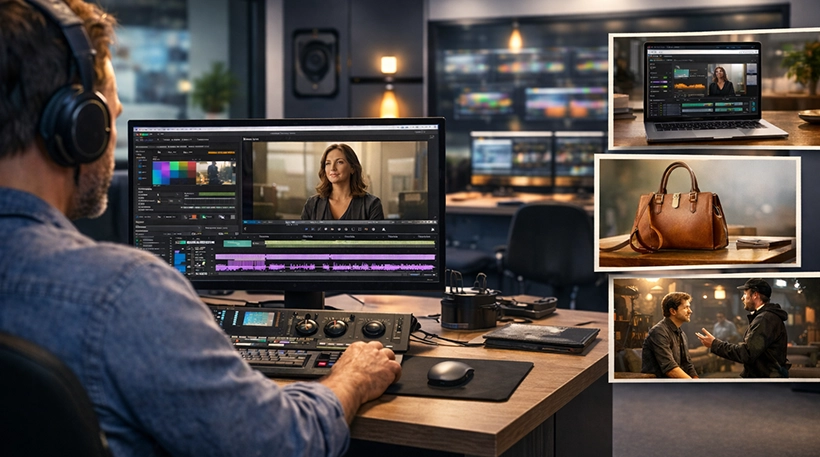
Professional video editors do not simply assemble footage. They interpret intent.
They adjust pacing based on message priority, not waveform spikes. They resolve continuity issues that automation does not recognize as errors. They adapt edits based on platform nuance rather than generic presets.
In SaaS and tech marketing, editors align visuals with product positioning. In e-commerce, they balance clarity with brand tone. In entertainment and media, they protect narrative integrity.
These decisions are situational, not procedural.
Editors are necessary to oversee outputs, verify tone, and guarantee conformity with creative objectives, even for teams that use Premiere Pro AI video editing software.
Governance Challenges in Automated Video Workflows
As automation expands, governance becomes more complex.
Who owns creative accountability when automated edits underperform? Who validates compliance in regulated content? Who ensures consistency across regions and audiences?
AI systems do not participate in governance. They do not flag brand risk. They do not escalate ambiguity.
Professional editors do.
In large organizations, this governance gap becomes one of the most overlooked costs of automation. It does not show up in production metrics. It shows up in internal reviews, rework cycles, and stakeholder dissatisfaction.
The Misconception of Replacement
Much of the AI video editing narrative assumes substitution. This assumption oversimplifies creative labor.
Editors are decision-makers embedded within production systems. They absorb context from briefs, feedback loops, brand guidelines, and audience response.
An AI professional video editor does not exist in practice. What exists are tools that assist editors or attempt to simulate editorial decisions without understanding their downstream impact.
This misunderstanding leads many teams to over-automate early and then struggle to reintroduce editorial control later.
Trade-offs Teams Must Evaluate at the Consideration Stage
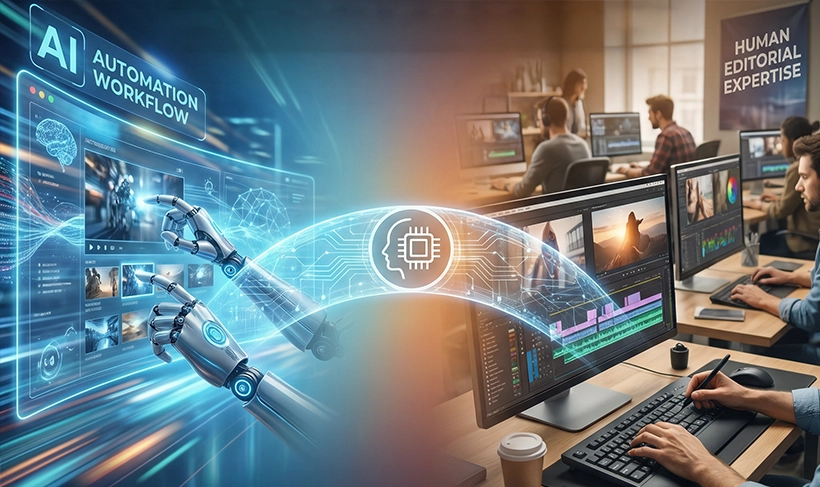
Automation offers speed and predictability. Human editors offer adaptability and accountability.
This is where AI + human editorial workflow benefits become relevant, not as a promise of efficiency, but as a framework for balancing scale with judgment.
The trade-off is not cost versus quality. It is convenience versus control. This distinction defines the real business implications of AI video editing vs professional video editors at scale.
Why the Problem Persists Across Industries
This tension persists because incentives are misaligned.
Operations teams prioritize throughput. Creative leadership prioritizes differentiation. Automation promises relief without requiring structural change.
Professional editors require integration into planning, review, and governance. That integration demands organizational maturity.
As long as content volume grows faster than editorial capacity planning, this imbalance will remain.
Directional Outcomes Organizations Actually Seek
Most teams are not looking for perfection. They want stability.
Consistent quality across outputs. Fewer revisions. Clear ownership. Editorial coherence at scale.
These outcomes do not come from choosing technology alone or talent alone. They come from understanding where automation stops being sufficient.
That understanding starts by recognizing the limits of AI video editing.
FAQ’s
Can AI entirely assume the responsibilities of professional video editors?
No. AI handles monotonous tasks, but skilled editors are essential for evaluating narratives, ensuring brand consistency, maintaining contextual accuracy, and upholding creative accountability in complex video production environments.
In which aspects do human editors still outshine AI in video editing?
Skilled editors excel beyond AI in developing stories, selecting pacing, maintaining brand voice, ensuring consistency, managing compliance-driven content, and interpreting ambiguous creative or editorial objectives.
Are AI systems assuming the function of editors?
Editors are not being replaced. With automation handling regular editing duties, their responsibilities are shifting towards supervision, creative choices, quality assurance, and management.
Which tools are primarily used by most professional editors for video editing?
Most professional editors employ industry-standard software and automation features, relying on their expertise, judgment, and editorial frameworks rather than fully automated editing systems.
Is video editing powered by AI appropriate for professional uses?
AI video editing is highly effective for managing tasks with high volume and low context, yet it faces challenges in professional scenarios where narrative clarity, brand recognition, regulatory adherence, and consistent editorial standards are required.
Video Caddy