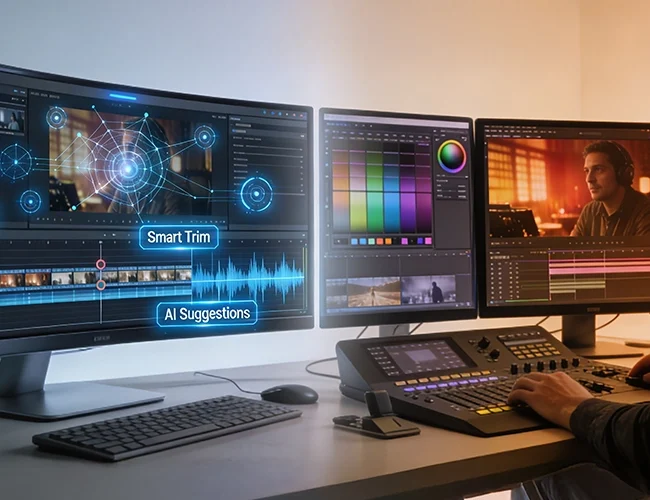
The animation sector is rapidly evolving as studios, game developers, and creative organizations discover ways to produce high-quality pictures more rapidly. Traditional technology cannot meet expectations for immersive settings, realistic character animation, and real-time previews. Machine learning and neural networks provide neural rendering, which can scale production without sacrificing quality.
What is Neural Rendering in Animation?
Neural rendering is the use of neural network animation techniques to generate or refine images and sequences. Instead of depending entirely on traditional render engines, it applies artificial neural network animation models that predict lighting, textures, and motion. This reduces the need for frame-by-frame computation.
Neural rendering gives animators access to real-time previews, lowers expenses, and facilitates quicker decision-making in both 2D and 3D animation rendering processes.
The Significance of Neural Rendering for Game Developers and Studios
Rendering pipelines that require a lot of resources and strict timelines are common problems for game developers and studios. Neural rendering offers a more rapid and adaptable method of creation.
1. Speed Without Compromise
GPU performance and 3D animation rendering programs like Maya or Blender are key components of traditional rendering. Although purchasing the top graphics card to render 3D animation might shorten processing times, scale-related delays remain unresolved. Neural rendering uses deep learning for faster VFX rendering, helping teams cut rendering time while maintaining visual quality.
2. Unlocking Real-Time Production
Game developers working on immersive environments benefit from real-time AI rendering for VR/AR. This capability is significant for metaverse animation, where environments must render smoothly during interaction. Neural rendering supports AI-assisted video rendering, which allows instant previews of neural animation.
3. Production Flexibility
Neural rendering integrates with both 2D and 3D animation pipelines. Advertising agencies, education platforms, and film studios can easily adapt the technology. From Adobe After Effects for motion graphics to industrial-level 3D animation rendering services, neural rendering provides cross-pipeline flexibility.
Applications Across Industries
Different industries are adopting neural rendering at scale to improve turnaround time and manage complexity.
Film & VFX Studios
Large productions rely on animation neural networks to optimize heavy visual effects and detailed environments. Neural rendering allows for consistent production-quality animation on schedule.
Gaming Companies
From cinematic cutscenes to interactive neural transmission animation, studios use 3D neural rendering to create realistic character movements and lifelike settings.
Advertising & Creative Agencies
Agencies creating commercials and product videos need speed without losing impact. AI-powered character animation combined with RTX neural rendering helps cut delivery time while maintaining visual fidelity.
EdTech & E-Learning Companies
The demand for animated training videos and immersive content is increasing. Neural rendering supports large-scale 3D animation rendering for e-learning providers.
AR/VR & Metaverse Startups
Startups are using generative AI for animation production to create interactive experiences. Neural rendering allows them to build content at scale, setting the stage for the future of animation in immersive platforms.
AI vs Traditional Rendering
Traditional rendering plays a major role in animation production, but it is resource-heavy and time-consuming. The debate of AI vs traditional rendering is about efficiency rather than replacement. Neural rendering complements existing methods by accelerating iterations and reducing dependence on large render farms. For studios, AI rendering for 3D animation means better resource allocation and faster client delivery.
Tools and Workflows: Neural Rendering in Practice
Studios are now experimenting with AI animation rendering software that works with existing 3D animation rendering software. These tools blend neural models with GPU acceleration to create hybrid workflows. This setup also enables faster video editing workflows for editorial, motion graphics, and finishing teams.
Currently neural rendering is being applied in:
- AI-assisted video rendering for quick previews and client reviews.
- Machine learning animation pipelines that automate repetitive tasks and asset adjustments.
- Real-time neural rendering for VR and interactive environments.
These solutions are no longer experimental. Many neural rendering case studies across film, gaming, and advertising confirm their use in production.
Benefits of Neural Rendering
Neural rendering brings measurable improvements to production workflows across animation, gaming, and advertising.
- Reduced Rendering Time: Complex sequences render in minutes instead of days.
- Improved Iterations: Directors and clients see multiple variations faster.
- Cost Efficiency: Lower investment in render farms and GPU infrastructure.
- Consistency: Animation neural networks keep frames uniform in quality.
- Innovation: Creates opportunities for AI in metaverse animation, virtual production, and real-time storytelling.
The Future of Animation with Neural Rendering
The future of animation will be defined by speed, scalability, and creative freedom. Studios that adopt AI-powered character animation will remain competitive, while industrial 3D animation rendering services will expand their capabilities globally.
For agencies, e-learning platforms, and startups, neural rendering represents the next step in producing immersive, interactive, and commercially viable content.
FAQs
How does neural rendering reduce animation rendering time compared to traditional methods?
Neural rendering uses animation neural networks to predict image details instead of computing them frame by frame. This significantly reduces rendering time.
Can 2D and 3D animation processes employ neural rendering?
Indeed. Neural rendering supports both workflows, including intricate 3D animation pipelines and Adobe After Effects applications.
What are the primary advantages of neural rendering for game developers and animation studios?
Some main advantages are faster rendering, lower costs, improved consistency, and support for real-time AI rendering for VR/AR.
Is neural rendering reliable for production-quality animation or just experimental?
It is already being used in films, gaming, and advertising. AI-generated animation examples show it is production-ready.
What are any actual instances of neural rendering in advertising, video games, or movies?
Case studies of neural rendering emphasize its use in animated ads, visual effects-heavy films, and dramatic cutscenes in video games.
Video Caddy