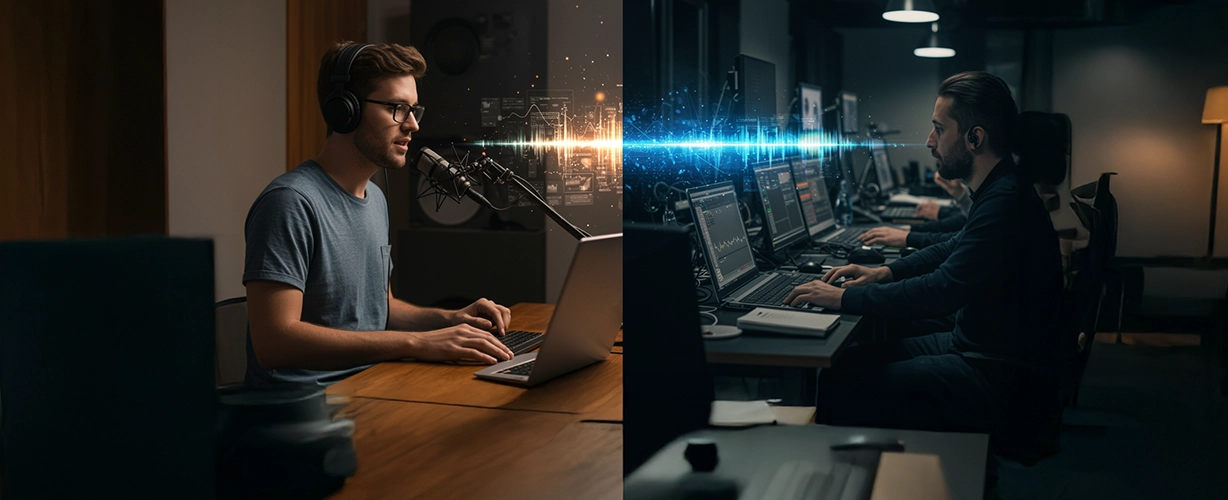
Podcast teams deal with a lot more than listeners realize. A single episode often needs days of attention. Producers switch between planning, coordination, managing guests, writing notes, and reviewing scripts. Editing ends up eating the biggest share of time.
Internal teams want to focus on content development, research, and guest preparation. But raw audio captures everything, including distractions, flaws, and imperfections. It carries noise, uneven gain, accidental overlaps, and fragments that need trimming. Professional podcast editing services take this load off. They bring trained engineers, follow organized workflows, and ensure predictable turnaround times that keep weekly releases on track.
Independent production agencies, podcast networks, corporate brands, and YouTube shows all face the same problem: editing delays everything else. Outsourcing fixes that issue at the root.
Editing Takes More Time Than Everything Else Combined
Most producers realize the same thing after a few months of consistent publishing. Recording takes an hour. Editing takes three to five. Any multi-track session demands even more. When you run two or three shows at once, there is no room left for creative decisions or guest outreach.
This is why the best podcast producers and agencies rely on external teams. They don’t want editing to dictate the pace of their release calendar. Outsourcing lets them focus on narrative building instead of being stuck inside long sessions cleaning room noise or correcting levels.
Producers who move editing outside the internal team report fewer missed deadlines, fewer late-night revisions, and cleaner, more reliable output.
Why Outsourcing Delivers Better Consistency
Listeners judge audio quality within minutes. They won’t tolerate inconsistent levels or rough transitions. When you work with specialists trained in professional podcast editing, you remove this problem entirely. Their ears are tuned for timing, tone, pacing, and detail. They clean dialogue, repair damaged sections, remove hums, reduce harsh consonants, and blend segments smoothly.
This is exactly why many businesses now prefer hiring a podcast editing agency instead of depending on in-house editors. It’s not about replacing talent. It’s about getting consistent, repeatable quality every week.
Experienced teams use structured workflows, calibrated systems, and review steps that help maintain uniform sound across different seasons, formats, and hosts.
You Save Hours Every Week with a Better Workflow
One of the biggest benefits of outsourcing is time-recovery. Producers get back hours that were earlier spent cutting pauses, aligning tracks, or balancing voice tones. External editors work on fixed delivery cycles. You send the raw session, and they handle the rest.
This model works especially well for:
- Media companies with tight publishing calendars
- Corporate brands running internal podcasts
- Podcast networks managing multiple titles
- YouTube shows with dual audio-video complexity
- Growing independent hosts who want fast turnaround
Scaling internally requires onboarding, training, software investment, and performance monitoring. Outsourcing removes all these steps. You get immediate access to trained editors and fast production pipelines.
Today, large agencies consider outsourced editing solutions for scalable YouTube content production, particularly when episodes need reels, shorts, clipped segments, and cross-platform adaptations.
Experienced Engineers Bring Techniques Many Internal Teams Don’t Have Time For
Editing isn’t just cutting. It involves advanced cleanup work that internal teams often skip because of time pressure. Skilled editors working daily on varied sessions understand how to handle difficult files, patch gaps, or repair flawed audio in ways that lift the final episode noticeably.
Some techniques include:
- Spectral repair
- Multi-band compression
- De-reverb
- Harmonic balancing
- Tight dialogue pacing
- Level uniformity across long episodes
Many top podcast producers rely on these processes to keep their show polished. Outsourcing provides this level of detail without the need for costly plug-ins or dedicating hours to technical tasks.
Numerous teams also favor a sole partner capable of managing audio editing for podcasts, audiobooks, voiceovers, and music tracks, guaranteeing that all audio assets retain a consistent sonic quality.
Support for Series-Based, Seasonal, and High-Volume Shows
Once a show gets traction, production usually speeds up. Sponsors expect quicker delivery. Brands need more content to push campaigns. Publishers expand into multi-format audio. Outsourcing supports that scale without overwhelming internal teams.
Most external partners handle:
- Editing
- Dialogue cleanup
- Mixing and balancing
- Mastering
- Deliverables for each platform
- Versioning
- Show notes and clip preparation
This structure is extremely useful for producers who manage multiple shows in parallel. Instead of juggling editing calendars, they assign episodes to an external pipeline and stay focused on creative work.
How Outsourcing Improves Perceived Brand Value
Strong audio quality determines how listeners view the brand behind the broadcast. Listeners identify a polished organization when voices are clear, levels are balanced, and tempo feels natural. This matters a lot for corporate podcasts, leadership shows, and branded storytelling series.
Quality editing also matters because how professional editing enhances brand credibility and content quality can shape listener trust. Brands invest heavily in design, communication, and PR. Audio should reflect the same level of detail.
Listeners rarely forgive inconsistent audio. Outsourcing ensures every episode meets the same quality marker regardless of recording conditions.
Smooth Workflow, Documentation, and Asset Handling
When you work with a mature post-production partner, you also gain structured documentation. Producers receive episode logs, version history, track sheets, and detailed delivery notes. This makes revisions easier, especially when episodes require multiple cuts or when several editors collaborate on the same show.
Large publishers and corporate content teams benefit from this clarity, since as it helps manage deadlines, approvals, and season planning.
Complete Editing, Mixing, and Mastering Support
Good audio editing is only one part of the process. Each episode requires a final touch-up prior to airing. Numerous outsourcing partners manage podcast mixing, mastering, and post-production for creators and brands, enabling producers to keep audio ready for platforms without dedicating hours to adjustments.
This includes:
- Loudness alignment
- Music bed adjustment
- EQ sculpting
- De-essing
- Repairing harsh tones
- Normalization for YouTube, Spotify, and Apple Podcasts
Producers Can Stay Focused on Creative and Strategic Work
When editing responsibilities shift outside, producers finally get time to refocus on growth-oriented work:
- Securing stronger guests
- Strengthening story structure
- Planning multi-episode arcs
- Shaping brand messaging
- Distributing episodes across more platforms
- Building social cuts and promotional materials
Internal producers shouldn’t spend nights smoothing audio when an external team can do it faster and better. Outsourcing lets them maintain control over the creative direction while leaving the technical layers to specialists.
Why Outsourcing Helps Fast-Moving Teams Stay Ahead
Whether you run a production agency or manage a brand-owned podcast, editing usually becomes the slowest part of the workflow. Outsourcing solves the slowdown. You get predictable delivery, technical expertise, and room for creativity. Your episodes move from draft to publish-ready without friction.
For producers handling multiple shows, outsourcing stops burnout and ensures the final output looks and sounds consistent. For brands entering podcasting seriously, outsourcing helps them maintain professional quality right from the first episode.
Conclusion
Outsourcing is not about replacing an internal team. It’s focused on increasing capacity while not increasing your costs. It safeguards your timetable, maintains the audio clarity, and guarantees that every episode matches the tone your brand aims to convey.
Adopting outsourced editing has become a very effective way for agencies, publishers, corporate brands, networks, and independent producers to maintain consistent production. Fast reaction times, consistent quality, and easy processes help producers keep viewers interested.
FAQ’s
What factors support the decision to outsource my podcast editing instead of doing it myself?
Outsourcing removes the most time-consuming part of production. You get reliable quality, trustworthy delivery, and increased ability to focus on guests, stories, and strategy.
Can outsourcing improve the quality of my podcast and attract a larger audience?
Of course. Skilled editors improve pacing, remove distractions, refine dialogue, and produce the final mix to create a refined podcast experience, motivating listeners to remain engaged and keep coming back.
Does outsourcing encompass the complete podcast production?
The majority of providers take care of editing, mixing, mastering, show notes, and files ready for platforms. They facilitate complete production, simplifying the management of uniform releases throughout the season.
How many rounds of revisions or edits are included when outsourcing?
Revision cycles vary based on your plan, yet the majority of services provide several rounds. This assists producers in refining pacing, tone, and structure until the episode aligns with the intended sound.
Is outsourcing worth it for small or early-stage podcasts?
Yes. Clean audio builds credibility from day one. Outsourcing lets smaller shows publish consistent, refined episodes without spending extra time learning complex editing techniques.
Video Caddy